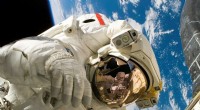
Astronauts are highly trained professionals who work in space. They are responsible for a variety of tasks, including conducting experiments, maintaining spacecraft, and performing spacewalks. To become an astronaut, candidates must have a bachelor's degree in engineering, biological science, physical science, or mathematics, as well as at least 1,000 hours of pilot-in-command time in jet aircraft. They must also be in excellent physical and mental health.
Once they are selected, astronaut candidates undergo two years of training at the Johnson Space Center in Houston, Texas. This training includes coursework in space systems, robotics, geology, and physiology. Astronauts also learn how to operate spacecraft, perform spacewalks, and conduct experiments.
After completing their training, astronauts are assigned to missions. They may work on the International Space Station, conduct spacewalks, or even travel to other planets. Astronauts typically work in teams of two or three, and they are always accompanied by a mission control team on Earth.
The Work of Astronauts
The work of astronauts is varied and challenging. They may be responsible for any of the following tasks:
* Conducting experiments: Astronauts conduct a variety of experiments in space, including experiments on human physiology, zero gravity, and the effects of radiation.
* Maintaining spacecraft: Astronauts perform routine maintenance on spacecraft, such as changing filters and repairing broken equipment.
* Performing spacewalks: Astronauts perform spacewalks to conduct repairs, experiments, and other tasks outside of the spacecraft.
* Operating spacecraft: Astronauts operate spacecraft, including launching them, docking them with other spacecraft, and maneuvering them in space.
* Communicating with Earth: Astronauts communicate with the mission control team on Earth using a variety of methods, including voice, video, and teletype.
The Challenges of Being an Astronaut
Being an astronaut is a challenging and demanding profession. Astronauts must be able to work in a high-stress environment, adapt to changing conditions, and remain calm under pressure. They must also be able to work well with others, as they are often part of a team of astronauts and mission control personnel.
Some of the challenges of being an astronaut include:
* The physical demands of space: Astronauts must be able to withstand the physical demands of space travel, such as zero gravity, radiation, and extreme temperatures.
* The psychological challenges of space: Astronauts must be able to cope with the psychological challenges of space travel, such as isolation, loneliness, and the potential for danger.
* The risks of space travel: Space travel is a risky business, and astronauts must be aware of the potential for injury or death.
Despite the challenges, being an astronaut is a rewarding and fulfilling profession. Astronauts have the opportunity to explore space, conduct important research, and help to advance our understanding of the universe.
The Future of Astronauts
The future of astronauts is bright. There are many exciting new missions planned for the future, including missions to the Moon, Mars, and beyond. Astronauts will continue to play a vital role in exploring space and advancing our understanding of the universe.