Launch and Landing:
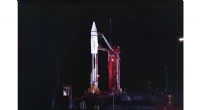
1. Launch: The rover is launched into space atop a rocket, often in conjunction with other spacecraft components like orbiters or entry vehicles.
2. Cruise to Mars: The spacecraft travels millions of kilometers through space toward Mars, often spending several months or even years in transit.
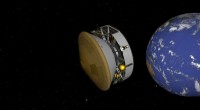
3. Entry, Descent, and Landing (EDL): Upon reaching Mars, the spacecraft enters the planet's atmosphere at high speed. Aerobraking, parachutes, and retrorockets are used to slow down the vehicle. Finally, the rover is gently lowered to the surface using a sky crane or other landing system.
Power Generation and Storage:
1. Solar Panels: Mars rovers are typically powered by solar energy. Solar panels on the rover's body capture sunlight and convert it into electricity.
2. Radioisotope Thermoelectric Generators (RTGs): RTGs are onboard nuclear power sources that generate electricity through the decay of radioactive materials. They provide a reliable and consistent power supply, especially during Martian nights or in low-light conditions.
Mobility and Navigation:
1. Wheels: Most Mars rovers are equipped with six wheels, providing all-terrain mobility and the ability to traverse rough Martian terrain.
2. Suspension System: The rovers have advanced suspension systems with independent wheel articulation to help them overcome obstacles and maintain stability on uneven surfaces.
3. Navigation Instruments: Rovers use a combination of cameras, sensors, and advanced algorithms to navigate autonomously across the Martian landscape. Cameras capture images, and onboard computers analyze these images to map the terrain and plan the rover's route.
Scientific Instrumentation:
Mars rovers are equipped with a variety of scientific instruments to study the Martian environment, geology, and potential habitability. These instruments may include:
1. Cameras: Rovers have high-resolution cameras for taking panoramic images, capturing close-ups, and documenting surface features.
2. Spectrometers: These instruments analyze the chemical composition of rocks, soil, and atmospheric gases by detecting and measuring their spectral properties.
3. Microscopes: Rovers may carry microscopic imaging instruments to examine samples at a very close range, revealing detailed surface textures and structures.
4. Drills and Sample Collection Tools: Some rovers have robotic arms equipped with drills to extract rock and soil samples for analysis onboard or for later return to Earth.
5. Environmental Sensors: Rovers carry instruments to measure temperature, pressure, humidity, and other atmospheric conditions.
Communication with Earth:
1. Radio Communication: Rovers communicate with Earth primarily through radio signals transmitted by powerful antennas on the spacecraft.
2. Orbiting Relays: Mars orbiters can also relay signals between the rovers and Earth, increasing communication opportunities.
Data Analysis:
1. Onboard Processing: Rovers have onboard computers that can analyze some of the collected data autonomously, making decisions about where to move and what to investigate next.
2. Earth-Based Analysis: The vast majority of data is sent back to Earth, where scientists and researchers analyze it to understand the Martian environment and history.
Challenges:
Operating on Mars presents numerous challenges, including harsh environmental conditions, distance from Earth, limited resources, and the need for autonomous decision-making.
Despite these challenges, Mars rovers have successfully explored the Red Planet, providing invaluable insights into its geology, climate, and potential for past or present life. They have also set the stage for future human missions to Mars.