1. Optical Telescopes:
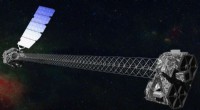
- Traditional optical telescopes collect visible light from space objects like stars, planets, and galaxies. Large telescopes with powerful light-gathering capabilities, such as the Hubble Space Telescope, allow scientists to detect distant and faint objects.
2. Infrared Telescopes:
- Infrared telescopes detect infrared radiation emitted by celestial objects. This wavelength range can reveal objects hidden behind clouds of dust and gas that block visible light.
3. Radio Telescopes:
- Radio telescopes pick up radio waves emitted by various cosmic sources like pulsars, quasars, and interstellar gas clouds. They play a crucial role in uncovering objects that might be invisible to optical telescopes.
4. Spacecraft and Probes:
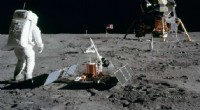
- Sending spacecraft and probes to specific locations in space provides close-up observations and detailed information about nearby objects, such as planets, moons, asteroids, and comets.
5. Stellar Parallax:
- Stellar parallax involves measuring the slight shift in the positions of nearby stars as seen from different points in Earth's orbit around the Sun. This technique allows astronomers to calculate the distances to nearby stars.
6. Photometry:
- Photometry measures the brightness and variations in the light output of celestial objects. This data helps identify features like eclipsing binary stars, transiting exoplanets, and variable stars.
7. Spectroscopy:
- Spectroscopy examines the spectrum of light emitted or absorbed by an object to study its composition, temperature, and motion. Spectral features can reveal the presence of specific elements or molecules.
8. Astrometry:
- Astrometry precisely measures the positions, distances, and movements of celestial objects. Astrometric observations can detect tiny wobbles in stars' motions caused by orbiting exoplanets.
9. Gravitational Microlensing:
- Gravitational microlensing occurs when the gravity of a massive object in space bends and magnifies the light from a background object. Microlensing events can signal the presence of planets orbiting distant stars.
10. Pulsars and Quasars:
- Pulsars and quasars, which emit regular pulses of radiation, serve as celestial beacons that astronomers use to determine their positions and distances. They can act as reference points for mapping other objects.
11. Supernovae:
- Supernovae are colossal stellar explosions that can be visible from vast distances. Astronomers use them as markers to measure distances to galaxies and estimate the expansion rate of the universe.
By employing these techniques and technologies, astronomers are able to peer into the depths of space, detect a wide range of objects, explore celestial environments, and unravel the mysteries of the cosmos.