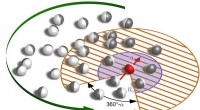
Millimeter wave scanners work by emitting millimeter waves, which are a type of electromagnetic radiation with wavelengths between 3 and 30 millimeters. These waves are reflected off of objects and collected by a receiver, which then creates an image of the object.
Millimeter wave scanners can be used to detect objects that are made of metal, plastic, or other materials that reflect millimeter waves. They can also be used to detect objects that are hidden behind walls or other barriers, as millimeter waves can penetrate through some materials.
Millimeter wave scanners are a powerful tool for security and surveillance, but they can also be used for other purposes, such as medical imaging and industrial quality control.
Here are the basic steps on how millimeter wave scanners work:
1. A millimeter wave transmitter emits millimeter waves towards the target object.
2. The millimeter waves interact with the object and reflect off its surface.
3. The reflected millimeter waves are collected by a receiver.
4. The receiver converts the millimeter waves into electrical signals.
5. The electrical signals are processed and analyzed by a computer to create an image of the object.
The image created by a millimeter wave scanner can be used to detect objects that are hidden from view or obscured by clothing. This makes millimeter wave scanners a valuable tool for security and surveillance purposes.