The Moon is thought to have formed about 4.5 billion years ago, shortly after the formation of Earth. The most widely accepted theory is that the Moon formed when a Mars-sized body called Theia collided with Earth. The impact ejected a large amount of material into orbit around Earth, which eventually coalesced into the Moon.
The Moon's Structure
The Moon is a differentiated body, meaning that it has a distinct crust, mantle, and core. The crust is made up of a variety of rock types, including basalt, anorthosite, and granite. The mantle is made up of a silicate material that is similar to the Earth's mantle. The core is made up of iron and nickel.
The Moon's Surface
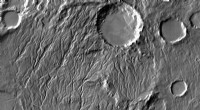
The Moon's surface is covered with craters, which are caused by impacts from asteroids and comets. The largest crater on the Moon is the South Pole-Aitken basin, which is about 2,500 kilometers (1,550 miles) across. The Moon's surface is also covered with a layer of dust called regolith, which is produced by the weathering of rocks by impacts and micrometeorites.
The Moon's Atmosphere
The Moon has a very thin atmosphere, which is composed mostly of oxygen, argon, and helium. The atmospheric pressure on the Moon is about one-trillionth of the atmospheric pressure on Earth. The Moon's atmosphere is too thin to sustain life as we know it.
The Moon's Rotation and Orbit
The Moon rotates on its axis once every 27.3 days. The Moon also orbits Earth once every 27.3 days. This means that the Moon is tidally locked to Earth, meaning that the same side of the Moon always faces Earth.
The Moon's Magnetic Field
The Moon does not have a global magnetic field. However, there are some localized magnetic fields on the Moon, which are thought to be caused by the presence of iron-rich minerals in the Moon's crust.
The Moon's Exploration
The Moon has been explored by both the United States and the Soviet Union. The first humans to walk on the Moon were Neil Armstrong and Buzz Aldrin, who landed on the Moon on July 20, 1969, as part of the Apollo 11 mission. Since then, there have been six other manned missions to the Moon.
The Moon is a fascinating and mysterious object that has been a source of wonder and inspiration for humans for centuries. The exploration of the Moon has given us a better understanding of our place in the solar system and has helped us to learn more about the history of the Earth and the Moon.