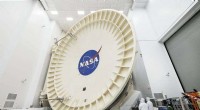
There are two main types of telescopes: refracting and reflecting. Refracting telescopes use lenses to focus light, while reflecting telescopes use mirrors. Reflecting telescopes are generally more powerful than refracting telescopes, as they can be made with larger mirrors.
The most common type of reflecting telescope is the Newtonian telescope. Newtonian telescopes use a parabolic primary mirror to focus light to a point, where a flat secondary mirror reflects the light to the eyepiece.
Other types of reflecting telescopes include the Cassegrain telescope, which uses a hyperbolic primary mirror and a convex secondary mirror, and the Schmidt-Cassegrain telescope, which uses a spherical primary mirror and a corrector plate to correct for spherical aberration.
Telescopes are used to observe a wide variety of objects in the sky, including stars, planets, galaxies, and nebulae. They are also used to study the properties of these objects, such as their temperature, composition, and motion.
Here is a more detailed explanation of how telescopes work:
1. Light from a distant object enters the telescope.
2. The objective lens or mirror focuses the light to a point called the focal point.
3. The eyepiece magnifies the image of the object at the focal point.
4. The viewer looks through the eyepiece to see the magnified image of the object.
The magnification of a telescope is determined by the focal length of the objective lens or mirror and the focal length of the eyepiece. The focal length of a lens or mirror is the distance between the lens or mirror and the focal point.
The larger the objective lens or mirror, the more light it can collect and the brighter the image will be. The shorter the focal length of the eyepiece, the higher the magnification will be.
Telescopes are powerful tools that can be used to observe a wide variety of objects in the sky. They are also used to study the properties of these objects, such as their temperature, composition, and motion.