1. Accretion:
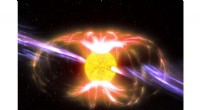
One primary way that black holes grow is through accretion. Accretion disks form around black holes when matter from nearby stars, gas clouds, or other sources falls towards them. As the matter spirals inward, it heats up and emits various forms of radiation, such as X-rays and gamma rays. The process of accretion gradually increases the mass of the black hole.
2. Mergers and Collisions:
Black holes can also grow by merging with other black holes or compact objects. When two black holes come close to each other, they can form a binary system and eventually merge into a single, larger black hole. These mergers release enormous amounts of energy in the form of gravitational waves, which have been detected by observatories like LIGO and Virgo.
3. Stellar Evolution:
Massive stars play a significant role in the formation and growth of black holes. When a massive star exhausts its nuclear fuel, it undergoes a catastrophic explosion known as a supernova. If the remaining mass after the supernova exceeds a certain threshold, it can collapse under its gravity to form a stellar black hole.
4. Galaxy Mergers:
Galaxy mergers are another mechanism that can contribute to the growth of black holes. When galaxies collide, their central supermassive black holes can form a binary system and eventually merge, leading to the formation of even more massive black holes.
5. Active Galactic Nuclei (AGN):
Some black holes are located at the centers of galaxies and are referred to as active galactic nuclei (AGN). AGN are incredibly luminous and emit vast amounts of energy across various wavelengths. The growth of AGN is fueled by the accretion of surrounding matter and can result in the formation of massive black holes.
Studying how black holes grow requires observations across multiple wavelengths and the use of advanced telescopes, such as X-ray observatories, radio telescopes, and gravitational wave detectors. By combining observational data with theoretical models and simulations, astronomers aim to gain a deeper understanding of the growth mechanisms of black holes and their impact on the universe's evolution.