Here are some of the evidence for a warm and wet early Mars:
1. Geological Features: Mars has numerous ancient riverbeds, deltas, and lakebed that point to the presence of liquid water on the planet's surface in the past. These features indicate periods when Mars had a warmer climate and liquid water could flow.
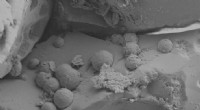
2. Minerals and Rocks: The presence of certain minerals, such as clay minerals and certain rocks, such as sedimentary rocks, on Mars suggest that water once interacted with the planet's surface. Clay minerals form in the presence of liquid water, and sedimentary rocks are formed by the deposition of sediments in an aqueous environment.
3. Atmospheric Composition: Analysis of the Martian atmosphere has revealed the presence of trace amounts of water vapor and methane. Methane, in particular, is thought to be produced by biological processes or geological activities that occur at higher temperatures.
However, there is also evidence that suggests that Mars experienced cold and icy conditions in its early history:
1. Polar Ice Caps: Mars has large polar ice caps made up of water ice and carbon dioxide ice, indicating prolonged periods of cold temperatures necessary to sustain these ice caps.
2. Past Glaciations: Geological evidence, such as glacial moraines and streamlined landforms, suggests that Mars experienced past glaciations, indicating periods of extensive ice cover.
3. Ancient Ice Sheets: Some research suggests that Mars may have had ice sheets that covered significant portion of its surface in the past, pointing to frigid climate during those times.
In summary, while there is evidence to support the idea that Mars once had a warmer and wetter climate, there are also indications that it has experienced cold and icy periods as well. Scientists are continuing to study the geological and atmospheric record of Mars to better understand the evolution of its climate over time.