Solar Flares and Coronal Mass Ejections (CMEs): The sun occasionally releases intense bursts of energy known as solar flares and coronal mass ejections. These events can send charged particles and radiation toward Earth, causing disruptions to communications and power systems, and potentially posing risks to astronauts and satellites.
Sunspots and the Solar Cycle: Sunspots are dark areas on the sun's surface that indicate regions of intense magnetic activity. The number of sunspots varies over an approximately 11-year cycle, known as the solar cycle. During periods of high solar activity, more sunspots appear, and the sun emits increased levels of radiation and energy.
Solar Prominences: Solar prominences are large, arching structures of plasma that extend outward from the sun's surface. While they appear graceful and majestic, they represent areas of intense magnetic activity and can sometimes erupt, releasing vast amounts of material into space.
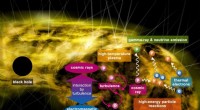
Solar Neutrinos: Neutrinos are subatomic particles that are emitted in large numbers from the sun's core during nuclear fusion reactions. However, the detection of solar neutrinos has been challenging, and scientists have observed a deficit in the number of neutrinos detected compared to theoretical predictions. This discrepancy, known as the solar neutrino problem, has been the subject of scientific investigation and debate.
Solar Interior: The sun's interior remains largely unexplored and mysterious. While scientists have gained knowledge through observations and models, the exact mechanisms and processes that drive the sun's energy generation and behavior are still subjects of ongoing research and exploration.
It's important to note that these aspects of the sun are not necessarily negative or harmful. They are natural phenomena that contribute to the complex nature of our star. However, understanding these dark secrets can help scientists better understand the sun's behavior and predict its impacts on Earth and the solar system.