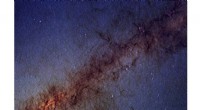
The first step in star formation is the collapse of a giant molecular cloud. These clouds are vast reservoirs of gas and dust that are found throughout the Milky Way galaxy. When a giant molecular cloud becomes sufficiently dense, it will begin to collapse under its own gravity.
As the cloud collapses, it will begin to fragment into smaller clumps. These clumps will eventually become individual stars. The process of fragmentation is not fully understood, but it is thought to be caused by a combination of factors, including turbulence, magnetic fields, and the rotation of the cloud.
Once a clump has formed, it will continue to collapse under its own gravity. As it collapses, the gas and dust in the clump will heat up. This heating is caused by the friction between the particles of gas and dust.
When the temperature of the gas and dust in the clump reaches a high enough level, nuclear fusion will begin. This is the process by which atoms are combined to form new elements. The energy released by nuclear fusion is what causes stars to shine.
The process of star formation can take anywhere from a few million to several billion years. The most massive stars are formed the most quickly, while the least massive stars are formed the most slowly.
Star formation is an important process because it is responsible for the creation of new stars. Stars are the basic building blocks of galaxies, and they provide the energy that drives the evolution of the universe.
Cosmic dust and gas play a crucial role in star formation. Dust and gas are the raw materials that are needed to form stars, and they also provide the environment in which stars are born.
The amount of dust and gas in a galaxy is a major factor in determining how many stars are formed. Galaxies that are rich in dust and gas are more likely to form stars than galaxies that are poor in dust and gas.
The distribution of dust and gas in a galaxy also affects how stars are formed. In galaxies where the dust and gas is evenly distributed, stars are more likely to form in a uniform manner. In galaxies where the dust and gas is concentrated in certain regions, stars are more likely to form in clusters.
The study of cosmic dust and gas is therefore essential for understanding how stars are formed and how galaxies evolve. By studying dust and gas, astronomers can learn more about the universe and its history.