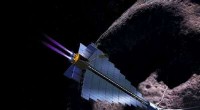
MAVEN has made several important discoveries about the Martian atmosphere. For example, it has found that the atmosphere is much thinner than it used to be, and that the planet is losing its atmosphere at a rate of about 1% per year. It has also found that the Martian atmosphere is composed mostly of carbon dioxide, with small amounts of other gases such as argon and nitrogen.
MAVEN's findings have helped scientists to better understand the history of Mars. They suggest that Mars may have once had a much thicker atmosphere, and that the planet may have once been warm enough to support liquid water on its surface. However, over time, the Martian atmosphere was lost, and the planet became the cold, dry desert that it is today.
MAVEN's findings have also helped scientists to better understand the future of Mars. They suggest that the planet is likely to continue to lose its atmosphere, and that it is unlikely to ever become warm enough to support liquid water on its surface again.
The MAVEN mission is an important part of our efforts to understand Mars and its history. By studying the Martian atmosphere, we can learn more about the planet's past, present, and future.