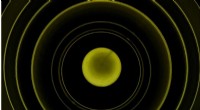
The disco clam, also known as the jewelbox clam, is found in the waters of Japan, Taiwan, the Philippines and Indonesia and displays vibrant light shows at night.
Marine biologist Dr Shigehiko Kaneko, of the Marine Biotechnology Institute in Japan, is the lead author on the study. He said: "The luminescent organs on two clam species, Ctenoides ales and Ctenoides scaber, emit various colours from yellow-green to crimson through blue-green by changing the concentration of a single type of photoprotein, termed 'clamydocin'".
The light show is usually seen during mating time and is thought to attract potential partners.
Dr Kaneko said the ability of a single protein to change colour and create vibrant light displays is unique and could have potential applications for human technology, particularly in the field of biological lighting.
The research was published in Scientific Reports.