The 2017 Nobel Prize in Physics was awarded to Rainer Weiss, Barry C. Barish, and Kip S. Thorne "for decisive contributions to the LIGO detector and the observation of gravitational waves."
The Laser Interferometer Gravitational-Wave Observatory (LIGO) is a pair of large-scale interferometers that are used to detect gravitational waves. Gravitational waves are ripples in spacetime that are caused by the acceleration of massive objects. They are predicted by general relativity, but they had never been directly detected until LIGO made the first observation in 2015.
The LIGO detectors are located in Hanford, Washington, and Livingston, Louisiana. They are each made up of two 4-kilometer-long arms that are perpendicular to each other. Laser beams are sent down the arms and reflected back by mirrors at the ends. If a gravitational wave passes through the detector, it will cause the arms to lengthen and shorten slightly, which will change the distance between the mirrors. This change in distance can be detected by the lasers, and it can be used to infer the properties of the gravitational wave.
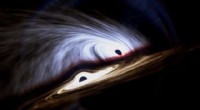
The first gravitational wave that was detected by LIGO was produced by the collision of two black holes. The event, which was named GW150914, occurred on September 14, 2015. The gravitational waves from the collision were detected by both of the LIGO detectors, and they were also detected by the Virgo interferometer in Italy.
The detection of gravitational waves was a major breakthrough in physics. It confirmed one of the key predictions of general relativity, and it opened up a new window on the universe. Gravitational waves can be used to study black holes, neutron stars, and other compact objects. They can also be used to probe the early universe and to understand the nature of gravity itself.
The Nobel Prize in Physics is one of the most prestigious awards in science. It is given to individuals who have made significant contributions to the field of physics. The award is a recognition of the importance of the research that was conducted by Weiss, Barish, and Thorne, and it is a testament to the impact that their work has had on our understanding of the universe.
Here are some additional details about the LIGO detectors and the detection of gravitational waves:
* The LIGO detectors are the most sensitive gravitational wave detectors in the world. They are capable of detecting gravitational waves that are as small as 10^-19 meters, which is about the size of a single atom.
* The gravitational waves from GW150914 were produced by the collision of two black holes that were about 30 and 65 times the mass of the Sun. The black holes collided at a speed of about half the speed of light, and they released an enormous amount of energy in the form of gravitational waves.
* The gravitational waves from GW150914 traveled for about 1.3 billion years before they reached Earth. They were detected by the LIGO detectors on September 14, 2015, at 11:50:45 UTC.
* The detection of GW150914 was a major breakthrough in physics. It confirmed one of the key predictions of general relativity, and it opened up a new window on the universe. Gravitational waves can be used to study black holes, neutron stars, and other compact objects. They can also be used to probe the early universe and to understand the nature of gravity itself.
The Nobel Prize in Physics is one of the most prestigious awards in science. It is given to individuals who have made significant contributions to the field of physics. The award is a recognition of the importance of the research that was conducted by Weiss, Barish, and Thorne, and it is a testament to the impact that their work has had on our understanding of the universe.