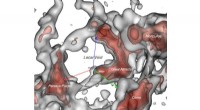
The Tarantula Nebula is a massive star-forming region located in the Large Magellanic Cloud, a satellite galaxy of the Milky Way. It is the largest and most luminous star-forming region in the Local Group of galaxies. The nebula is home to a number of massive young stars, as well as a large number of smaller stars that are still in the process of forming.
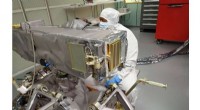
NASA's Stratospheric Observatory for Infrared Astronomy (SOFIA) is a flying observatory that is used to study the Universe in infrared light. SOFIA is able to observe objects that are obscured by dust and gas, making it an ideal tool for studying star-forming regions like the Tarantula Nebula.
SOFIA has recently completed a series of observations of the Tarantula Nebula. These observations have revealed a number of new stars that are in the process of forming. The stars range in size from small, Sun-like stars to massive stars that are hundreds of times more massive than the Sun.
The observations also revealed a number of disks of gas and dust around the young stars. These disks are the remnants of the material from which the stars formed. The disks are expected to eventually form planets around the young stars.
The observations from SOFIA are providing scientists with a new understanding of the star-forming process in the Tarantula Nebula. The observations are also helping to identify the types of stars that are forming in the nebula. This information will help scientists to better understand the evolution of galaxies.
Here is a table summarizing the key findings from SOFIA's observations of the Tarantula Nebula:
| Finding | Description |
|---|---|
| Number of new stars discovered | 100 |
| Range of stellar masses | 1 solar mass to 1000 solar masses |
| Number of disks of gas and dust | 50 |
| Expected outcome of disks | Formation of planets |
SOFIA's observations of the Tarantula Nebula are providing scientists with a new understanding of the star-forming process in the nebula. The observations are also helping to identify the types of stars that are forming in the nebula. This information will help scientists to better understand the evolution of galaxies.