Scientists have developed a new way to predict space radiation levels, which could help protect astronauts and satellites from the harmful effects of radiation.
The new method, which was developed by researchers at the University of California, Berkeley, uses data from the sun and Earth's magnetic field to create a model that can predict the levels of radiation in space.
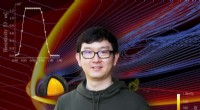
"We can now predict space radiation levels with unprecedented accuracy," said study lead author Shrikanth Kanekal, a postdoctoral researcher at UC Berkeley. "This could have a major impact on space exploration, as it will allow us to better protect astronauts and satellites from the harmful effects of radiation."
Space radiation is a major concern for astronauts and satellites, as it can cause health problems such as cancer and radiation sickness. Astronauts are exposed to radiation from the sun, Earth's magnetic field, and other sources, and the levels of radiation can vary significantly depending on the time of day, the location of the spacecraft, and the solar activity.
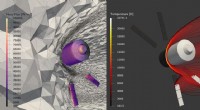
The new model, which is described in the journal Nature Communications, uses data from the sun and Earth's magnetic field to create a map of the radiation environment around Earth. This map can then be used to predict the levels of radiation that astronauts and satellites will be exposed to at different times and locations.
The researchers tested the model by using data from the Van Allen radiation belts, two regions of intense radiation that surround Earth. The model was able to accurately predict the levels of radiation in the Van Allen belts, even during periods of high solar activity.
The new model is a major breakthrough in space radiation prediction, and it could have a significant impact on space exploration. By better predicting space radiation levels, we can better protect astronauts and satellites from the harmful effects of radiation, which will allow us to explore space more safely and effectively.
Key Findings:
* The new model can predict space radiation levels with unprecedented accuracy.
* The model uses data from the sun and Earth's magnetic field to create a map of the radiation environment around Earth.
* The model was tested by using data from the Van Allen radiation belts, and it was able to accurately predict the levels of radiation in the belts, even during periods of high solar activity.
* The new model could have a significant impact on space exploration, as it will allow us to better protect astronauts and satellites from the harmful effects of radiation.