Deep learning is a powerful technology that is used for a variety of tasks, including automatic cloud detection. Cloud detection is the process of identifying and labeling clouds in images. This is a challenging task due to the fact that clouds can vary significantly in shape, size, and appearance. However, deep learning models have been shown to be very effective at this task.
How Deep Learning Works for Cloud Detection
Deep learning models are typically trained on large datasets of images that contain clouds. These models learn to identify the characteristic features of clouds, such as their texture, shape, and color. Once the model has been trained, it can be used to detect clouds in new images.
The process of cloud detection using deep learning is typically performed in two stages. In the first stage, the model is used to generate a probability map of the input image. This probability map indicates the likelihood that each pixel in the image belongs to a cloud. In the second stage, a threshold is applied to the probability map to generate a binary mask that identifies the clouds in the image.
Benefits of Deep Learning for Cloud Detection
There are a number of benefits to using deep learning for cloud detection, including:
- Accuracy: Deep learning models are very accurate at cloud detection. In fact, they are often more accurate than traditional methods of cloud detection.
- Speed: Deep learning models are very fast at cloud detection. This is important for applications that require real-time cloud detection, such as weather forecasting and satellite imagery analysis.
- Scalability: Deep learning models are scalable to large datasets. This is important for applications that need to process large volumes of data, such as climate research and climate change monitoring.
Applications of Deep Learning for Cloud Detection
Deep learning for cloud detection has a number of applications, including:
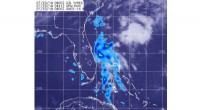
- Weather forecasting: Deep learning is used to detect clouds in satellite imagery, which is essential for weather forecasting.
- Climate research: Deep learning is used to detect clouds in historical satellite imagery, which is used to study climate change.
- Satellite imagery analysis: Deep learning is used to detect clouds in satellite imagery, which is used for a variety of purposes, such as land use mapping and environmental monitoring.
- Solar power: Deep learning is used to detect clouds in satellite imagery, which is used to predict solar power generation.
Conclusion
Deep learning is a powerful technology that is bringing automatic cloud detection to new heights. Deep learning models are very accurate, fast, and scalable, making them ideal for a variety of applications, including weather forecasting, climate research, and satellite imagery analysis.