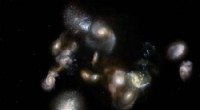
Using ALMA, a team of astronomers led by Dr. Rebecca A. Livermore at the University of Virginia studied eight massive rotating galaxies in the early universe. Because the universe is expanding and space is stretching as the light travels to reach us, the light from these galaxies has been stretched and appears red. This allowed the researchers to look 11 to 13 billion years into the past, near the very beginning of the universe.
The researchers were surprised to find that most of the galaxies they observed were rotating, indicating that they were already well-formed and stable at an earlier time in the history of the universe than previously expected. This finding was unexpected, as it challenges the prevailing models of galaxy formation.
"We expected that these early galaxies would be irregular and chaotic because the universe was much more turbulent at the time," says Dr. Livermore. "Our results suggest that the universe may have been calmer than we previously thought."
This discovery could have a major impact on our understanding of how the first galaxies formed. If galaxies were able to form and stabilize at an earlier time in the history of the universe, it means that the universe may be more complex and dynamic than we currently believe.
The results of this research were published in the journal Nature.