Testing General Relativity:
One of the primary scientific objectives of imaging a black hole is to test the predictions of Albert Einstein's theory of general relativity, which describes how gravity works. The extreme curvature of spacetime around a black hole provides a stringent testing ground for this theory, and any deviations from its predictions would have profound implications for our understanding of gravity and the fundamental laws of physics.
Exploring Quantum Gravity Effects:
Imaging a black hole could shed light on the elusive and yet-to-be-fully-understood realm of quantum gravity. Black holes are hypothesized to be the boundary where classical physics breaks down, and quantum effects become dominant. By analyzing the behavior of matter and energy near the black hole's event horizon, scientists could gain crucial clues about the nature of quantum gravity and the unification of quantum mechanics and general relativity.
Observational Evidence of Singularities:
At the heart of a black hole lies the singularity, a region of infinite curvature and density. While singularities are predicted by general relativity, they pose certain mathematical and philosophical challenges. Obtaining observational evidence of the black hole's event horizon and the region around it could provide significant insights into the nature of singularities and the behavior of matter under extreme conditions.
Understanding Accretion Disks and Jet Formations:
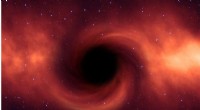
Black holes are known to accrete matter from their surroundings, often leading to the formation of accretion disks and powerful jets of particles and radiation. Imaging a black hole could reveal the intricate details of these phenomena, enhancing our understanding of how black holes feed and interact with their environments. Such knowledge would have significant implications for fields like astrophysics and cosmology.
Insights into AGN Formation and Feedback:
Active galactic nuclei (AGN) are incredibly luminous centers of galaxies believed to be powered by supermassive black holes. By imaging these supermassive black holes and studying their properties, scientists could gain valuable insights into the formation and evolution of AGN as well as their impact on the host galaxy. Understanding the interplay between black holes and their surroundings is essential for unraveling galaxy evolution processes.
Limits of Black Hole Physics:
Imaging black holes could push the boundaries of our current theoretical models and highlight potential limitations in our understanding of black hole physics. Deviations from expected behaviors or unexpected phenomena captured in the images could inspire new theories and open avenues for further exploration in fundamental physics.
In summary, imaging a black hole would provide invaluable observational data for testing fundamental theories, exploring the connection between classical physics and quantum phenomena, and advancing our understanding of black holes' role in the universe. It would mark a monumental achievement in astrophysics, setting the stage for transformative scientific discoveries and reshaping our comprehension of the cosmos.