1. Satellites:
- Early Warning Systems: Satellites equipped with infrared sensors constantly scan the skies, detecting the heat emitted by asteroids or meteoroids entering Earth's atmosphere. This allows astronomers to identify and track potential impactors well in advance, providing valuable time for planning and mitigation strategies.
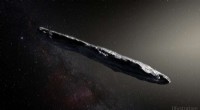
- Asteroid Characterization: Satellites can provide detailed information about an asteroid's size, shape, composition, and trajectory. This information is crucial for assessing the potential threat posed by an asteroid and determining the appropriate deflection or mitigation techniques.
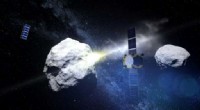
- Asteroid Redirection Missions: Satellites can be used to carry out asteroid deflection missions, such as the Double Asteroid Redirection Test (DART) mission launched by NASA in 2021. Satellites can collide with or place a spacecraft near an asteroid to alter its trajectory, preventing a potential collision with Earth.
2. Radar:
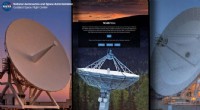
- Asteroid Detection and Tracking: Radar systems, both ground-based and space-based, can detect and track asteroids and meteoroids that may be difficult to observe using optical telescopes. Radar can provide information about an asteroid's orbit, size, and shape.
- Precise Orbit Determination: Radar observations help astronomers refine an asteroid's orbit and determine its future trajectory more accurately. This information is essential for assessing the potential risk of an impact and planning any necessary actions.
- Asteroid Characterization: Radar data can provide insights into an asteroid's internal structure, composition, and surface features. This information aids in understanding the asteroid's origin, evolution, and potential hazards.
3. Drones:
- Aerial Surveys: Drones equipped with sensors can be deployed to investigate meteorite impact sites, collect samples, and document the damage caused by impact events. This information is vital for studying the effects of meteorite impacts and developing strategies to mitigate their impact.
- Rapid Response: Drones can quickly reach remote impact sites, enabling researchers to respond promptly and gather valuable data before the evidence deteriorates or is contaminated.
- Mapping and 3D Modeling: Drones can create detailed maps and 3D models of impact sites, providing insights into the impact's scale and characteristics.
By combining the capabilities of satellites, radar, and drones, scientists and astronomers can monitor and track meteorites and asteroids, assess their potential impact risks, and develop measures to protect Earth from these extraterrestrial threats. These technologies contribute to Earth's asteroid defense system, ensuring our planet's safety and resilience.