Introduction:
For decades, astronomers have been intrigued by the mysteries surrounding the formation and evolution of galaxies in the early universe. As we delve deeper into the vast expanse of space, we have encountered a peculiar phenomenon that challenges our existing theories and redefines our knowledge of the cosmic past: giant baby galaxies. These colossal galaxies defy conventional wisdom, forcing us to reassess our understanding of how galaxies came into existence shortly after the Big Bang. In this exploration, we uncover the remarkable properties of giant baby galaxies and the profound implications they have on our perception of the early universe.
1. The Discovery: Unearthing Cosmic Giants:
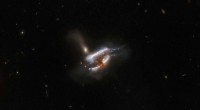
The discovery of giant baby galaxies marked a watershed moment in astrophysics. These galaxies were identified as massive clumps of gas and stars that exhibit astonishing growth spurts, forming at an accelerated pace during the early stages of the universe. They appear to have emerged fully formed, contradicting prevailing theories that galaxies gradually evolve from smaller structures over time.
2. Properties and Characteristics:
Giant baby galaxies possess several distinctive characteristics that set them apart from their contemporaries:
a. Rapid Growth: They underwent exceptionally rapid growth during their early stages, accumulating vast amounts of gas and stars at an unprecedented rate.
b. Advanced Maturation: Surprisingly, these galaxies displayed advanced structures, including spiral arms and central bulges, which were previously thought to develop over extended periods.
c. High Gas Content: Giant baby galaxies are characterized by an abundance of gas, fueling their rapid star formation and growth.
d. Massive Black Holes: They harbor supermassive black holes at their centers, providing a possible explanation for their accelerated evolution and immense energy output.
3. Implications for Cosmology:
The existence of giant baby galaxies introduces several challenges to our current understanding of the early universe:
a. Galaxy Formation Theories: Their accelerated growth and early maturation contradict standard models of galaxy formation, which predict a more gradual process.
b. Dark Matter and Dark Energy: The observed properties of giant baby galaxies raise questions about the role of dark matter and dark energy in shaping the universe's expansion and structure formation.
c. Cosmic Evolution: The presence of these galaxies suggests that the early universe may have been a more dynamic and complex environment than previously thought, enabling rapid and efficient galaxy formation.
4. Ongoing Investigations:
Astrophysicists are actively engaged in studying giant baby galaxies, employing advanced telescopes, simulations, and theoretical models to unravel their mysteries:
a. Observational Surveys: Wide-field surveys are being conducted to identify and characterize additional giant baby galaxies, expanding our sample size and providing more insights into their prevalence and distribution.
b. Simulations: Computer simulations are being developed to replicate the conditions of the early universe and explore possible scenarios for the rapid growth and evolution of giant baby galaxies.
c. Theoretical Models: Scientists are refining existing theoretical models of galaxy formation to incorporate the properties and behaviors observed in giant baby galaxies, aiming for a more comprehensive understanding of their origins and evolution.
Conclusion:
The discovery of giant baby galaxies has shaken the foundations of our knowledge about the early universe. These colossal structures pose significant challenges to conventional theories of galaxy formation and cosmic evolution, necessitating a deeper exploration into the mysteries of the universe's infancy. As astronomers continue to investigate these cosmic giants, we anticipate gaining profound insights into the complexities and wonders of the early cosmos, reshaping our understanding of how galaxies came to be and how the universe evolved into the vast and intricate tapestry we observe today.