Neutron stars are the collapsed cores of massive stars that have exhausted their nuclear fuel. They are extremely dense, with masses of about 1.4 solar masses and radii of only about 10 kilometers. This means that neutron stars have a density of about 10^14 grams per cubic centimeter, which is about the same density as an atomic nucleus.
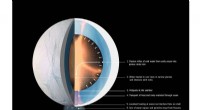
The matter inside neutron stars is so dense that it is in a state that is not well understood. This state of matter is called neutron matter, and it is thought to be composed of neutrons, protons, and electrons. However, the exact composition of neutron matter and the interactions between the particles that make it up are not known for certain.
Studying neutron stars can help us to understand the equation of state of neutron matter. The equation of state of a material describes how its pressure and density are related. By measuring the pressure and density of neutron stars, astronomers can learn about the interactions between the particles that make up neutron matter and the forces that hold them together.
The equation of state of neutron matter is important for understanding a number of astrophysical phenomena, such as the formation of neutron stars, the behavior of matter in the cores of white dwarfs, and the properties of neutron star mergers.
Neutron Stars and Dark Matter
Dark matter is a mysterious type of matter that makes up about 27% of the universe. It is invisible to telescopes, and its nature is not well understood. However, dark matter is thought to play an important role in the formation and evolution of galaxies.
Neutron stars can be used to probe the distribution of dark matter in the universe. By measuring the gravitational effects of dark matter on neutron stars, astronomers can learn about the amount and distribution of dark matter in the Milky Way galaxy and beyond.
Neutron Stars and Gravitational Waves
Gravitational waves are ripples in spacetime that are caused by the acceleration of massive objects. They are predicted by Einstein's theory of general relativity, and their existence has been indirectly confirmed by observations of binary pulsars.
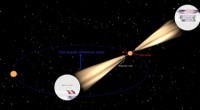
Neutron stars are ideal sources of gravitational waves. They are very compact and dense, and they can rotate very quickly. This combination of properties makes neutron stars very efficient at generating gravitational waves.
By observing gravitational waves from neutron stars, astronomers can learn about the properties of neutron stars and the universe. Gravitational waves can also be used to study the formation and evolution of black holes and other compact objects.
Conclusion
Neutron stars are fascinating objects that can help us to solve some of the universe's deepest mysteries. By studying neutron stars, we can learn about the nature of matter, the distribution of dark matter, and the properties of gravitational waves. Neutron stars are a valuable tool for astronomers and astrophysicists, and they will continue to be a source of new discoveries for many years to come.