The holographic principle is a theoretical idea that states that the universe may be a three-dimensional projection of a two-dimensional surface, similar to a hologram. This principle was first proposed by physicist Leonard Susskind in the 1990s, and it has since gained traction in the scientific community.
2. The Bekenstein Bound
The Bekenstein bound is a theoretical limit on the amount of information that can be stored in a given region of spacetime. This limit was proposed by physicist Jacob Bekenstein in the 1970s, and it is based on the laws of thermodynamics. The Bekenstein bound suggests that the universe may be finite and have a finite amount of information.
3. The Black Hole Information Paradox
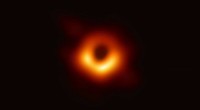
The black hole information paradox is a theoretical paradox that arises from the combination of quantum mechanics and general relativity. This paradox suggests that information can be lost when it falls into a black hole, which would violate the laws of physics. The holographic principle may offer a solution to the black hole information paradox by suggesting that information is not lost when it falls into a black hole, but rather is projected onto the black hole's event horizon.
4. The Universe as a Simulation
Some scientists have suggested that the universe may be a simulation created by an advanced civilization. This idea is known as the simulation hypothesis, and it is based on the fact that the universe appears to be fine-tuned for life and that it is possible to create realistic simulations of the universe using computer technology.
Conclusion
While there is no conclusive evidence that the universe is a hologram, the holographic principle, the Bekenstein bound, the black hole information paradox, and the simulation hypothesis all provide theoretical reasons to consider this possibility. Further research is needed to determine whether the universe is truly a hologram or if it is a more conventional three-dimensional reality.