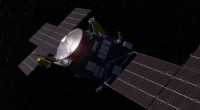
The EarthCARE satellite, a joint mission between the European Space Agency (ESA) and the Japan Aerospace Exploration Agency (JAXA), is set to launch in 2023. The satellite will carry a suite of instruments that will measure clouds and aerosols from space, and will provide new insights into how these particles affect the climate.
Clouds and aerosols play a complex and important role in the climate system. They reflect sunlight back into space, cooling the planet. They also trap heat near the surface of the Earth, warming the planet. The balance between these two effects depends on the type of cloud or aerosol, and on its altitude.
EarthCARE will provide the most detailed measurements of clouds and aerosols ever made from space. The satellite will carry a radar instrument that will measure the vertical structure of clouds, and a lidar instrument that will measure the size and shape of aerosols. EarthCARE will also carry a spectrometer that will measure the amount of sunlight reflected by clouds and aerosols.
The data from EarthCARE will help scientists to better understand the role of clouds and aerosols in the climate system. This information will be essential for improving climate models and for predicting how the climate will change in the future.
The EarthCARE mission
The EarthCARE satellite is a joint mission between ESA and JAXA. The satellite is being built by a consortium of European and Japanese companies. The total cost of the mission is estimated to be around €1 billion.
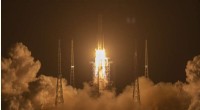
EarthCARE will be launched into orbit by a Vega-C rocket from the European Spaceport in Kourou, French Guiana. The launch is scheduled for 2023.
The satellite will operate in a low Earth orbit, at an altitude of about 400 kilometers. EarthCARE will complete one orbit of the Earth every 100 minutes.
The EarthCARE instruments
EarthCARE will carry a suite of four instruments that will measure clouds and aerosols from space. The instruments are:
* A cloud profiling radar (CPR)
* A lidar
* A multi-spectral imager (MSI)
* A broadband radiometer (BBR)
The CPR will measure the vertical structure of clouds. The instrument will use radar waves to measure the amount of time it takes for the waves to travel from the satellite to the clouds and back. The CPR will be able to measure clouds with a vertical resolution of 500 meters.
The lidar will measure the size and shape of aerosols. The instrument will use laser light to measure the amount of time it takes for the light to travel from the satellite to the aerosols and back. The lidar will be able to measure aerosols with a size resolution of 1 micrometer.
The MSI will measure the amount of sunlight reflected by clouds and aerosols. The instrument will have 20 spectral channels, ranging from the visible to the infrared. The MSI will be able to measure the reflectance of clouds and aerosols with a spatial resolution of 500 meters.
The BBR will measure the amount of solar radiation reaching the Earth's surface. The instrument will have three channels: a visible channel, a near-infrared channel, and a shortwave infrared channel. The BBR will be able to measure the solar radiation with a spatial resolution of 10 kilometers.
The EarthCARE data
The data from EarthCARE will be transmitted to ground stations in Europe and Japan. The data will be processed and distributed to scientists around the world.
The EarthCARE data will be used to study clouds and aerosols in unprecedented detail. The data will help scientists to better understand the role of clouds and aerosols in the climate system, and to predict how the climate will change in the future.
The EarthCARE mission is a major scientific undertaking that will provide new insights into the role of clouds and aerosols in the climate system. The data from EarthCARE will help scientists to better understand the climate and to predict how it will change in the future.