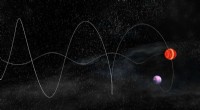
Microlensing: This technique involves observing the slight brightening of a star as a rogue planet passes in front of it. By studying these microlensing events, astronomers can infer the presence of a rogue planet and estimate its size and distance.
Direct Imaging: In cases where the rogue planet is relatively close and massive, direct imaging may be possible using powerful telescopes equipped with advanced imaging techniques. This involves capturing a visual image of the planet.
Spectroscopy: By studying the light emitted or reflected by a rogue planet, astronomers can use spectroscopy to analyze its composition and atmospheric properties. This can provide insights into the planet's formation and evolution.
Gravitational Microlensing: Similar to microlensing, this technique involves observing the way a rogue planet's gravitational field bends the light from a background star. This method can provide information about the planet's mass and orbital characteristics.
Transit Photometry: If a rogue planet passes in front of a distant star from our perspective, it can cause a slight dip or "transit" in the star's brightness. By analyzing these transits, astronomers can determine the planet's size and orbital period.
Astrometry: This technique involves measuring the precise positions of stars over time. If a rogue planet is orbiting a distant star, it can cause the star to wobble slightly in its orbit. This astrometric motion can be detected by high-precision telescopes.
It's worth noting that exploring rogue planets would be extremely challenging due to their remote and potentially faint nature. Sending spacecraft to these distant objects may be technically difficult and require advanced propulsion technologies. Additionally, rogue planets often do not have a host star, which means they lack a source of reflected or reprocessed light for detection and analysis. Therefore, the feasibility of exploring rogue planets on a large scale largely depends on the advancement of our technology and our ability to overcome these challenges.