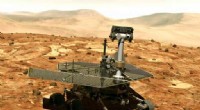
One potential way to explore Neptune and Triton is by sending robotic spacecraft equipped with advanced instruments and sensors. These spacecraft could be designed to withstand the harsh conditions and collect data on the planets' atmospheres, magnetic fields, and other features. For example, the Voyager 2 spacecraft, launched in 1977, performed a flyby of Neptune in 1989 and provided valuable data on its atmosphere and magnetic field.
Another approach to exploring Neptune and Triton is through telescopic observations from Earth or space-based telescopes. Telescopes equipped with powerful cameras and spectrometers can capture images and gather information on the planets' atmospheric composition, temperature, and cloud formations. By using advanced observation techniques, scientists can study Neptune and Triton without having to send spacecraft directly to their vicinity.
Additionally, computer simulations and modeling can be used to study the dynamics and behavior of Neptune and Triton's atmospheres. By creating detailed models of the planets' atmospheric processes and incorporating data from observations and spacecraft missions, scientists can gain insights into the evolution and behavior of these distant worlds.
In summary, while human exploration of Neptune and Triton is not currently feasible, scientists use a combination of robotic spacecraft missions, telescopic observations, and computer simulations to explore and study these remote celestial bodies and their fascinating atmospheres.