Introduction:
The James Webb Space Telescope (JWST), the most powerful and advanced space telescope ever built, has opened new frontiers in exoplanet exploration. With its unparalleled sensitivity and capabilities, the JWST has the potential to revolutionize our understanding of these distant worlds and their atmospheres, and pave the way for future missions focused on exoplanet characterization. This roadmap outlines key strategies to maximize the scientific return from JWST observations of exoplanets, focusing on optimizing observing techniques, data analysis methods, and collaboration among researchers.
1. Optimizing Observing Techniques:
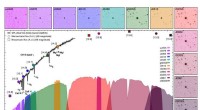
a. Transit Spectroscopy: Refining techniques to capture high-quality transmission spectra during exoplanet transits, enabling precise measurements of atmospheric composition and structure.
b. High-contrast Imaging: Developing advanced image processing algorithms to directly image faint exoplanets and circumstellar disks, pushing the boundaries of detectability.
c. Coronagraphy: Exploring new coronagraph designs and techniques to mitigate the glare from host stars, allowing for better imaging of exoplanets.
2. Advanced Data Analysis Methods:
a. Atmospheric Modeling: Developing sophisticated atmospheric models to interpret transmission and emission spectra, accurately inferring temperature profiles, composition, and cloud properties of exoplanets.
b. Time-series Analysis: Utilizing advanced time-series analysis techniques to detect temporal variations in exoplanet atmospheres and study dynamic processes such as weather patterns.
c. Comparative Planetology: Conducting comparative studies of exoplanets with Earth and other solar system bodies, providing insights into the formation and evolution of planetary systems.
3. Collaborative Research and Data Sharing:
a. Open Data Access: Promoting open access to JWST data, fostering collaborations, and enabling researchers worldwide to contribute to exoplanet science.
b. Community Workshops: Organizing workshops and conferences to facilitate knowledge exchange, share best practices, and develop strategies for coordinated JWST observations.
c. Interdisciplinary Collaboration: Encouraging interdisciplinary collaborations between astronomers, planetary scientists, astrophysicists, and chemists to gain a holistic understanding of exoplanet systems.
4. Key Scientific Priorities:
a. Atmospheric Biosignatures: Prioritizing observations of exoplanets with potential atmospheric biosignatures, such as water vapor, carbon dioxide, and methane, to assess their habitability.
b. Planetary Diversity: Investigating the diversity of exoplanetary systems, including rocky planets, gas giants, and super-Earths, to understand the range of planetary architectures in the universe.
c. Comparative Meteorology: Studying the meteorology and weather patterns of exoplanets, shedding light on atmospheric dynamics and the potential for habitable conditions.
5. Long-Term Vision and Legacy:
a. Synergies with Future Missions: Exploring how JWST observations can complement future space missions, such as the Nancy Grace Roman Space Telescope, to advance exoplanet science.
b. Public Outreach: Engaging the public through educational programs, visualizations, and multimedia content, inspiring the next generation of astronomers and scientists.
c. Legacy Data Preservation: Ensuring the long-term preservation of JWST data, allowing future researchers to build upon and expand our understanding of exoplanets.
Conclusion:
The James Webb Space Telescope has the potential to transform our understanding of exoplanets and reshape the field of exoplanet exploration. By optimizing observing techniques, developing advanced data analysis methods, fostering collaboration, and focusing on key scientific priorities, we can maximize the scientific return from JWST observations and embark on a journey of discovery that will reveal the secrets of these distant worlds and bring us closer to understanding our place in the universe.