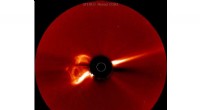
1. Solar Storms: Auroras result from the interaction between charged particles from the sun and Earth's magnetic field. The sun's activity, especially during solar storms or coronal mass ejections, can have significant effects on the occurrence and intensity of auroras. Predicting the exact timing, intensity, and location of solar storms is intricate and involves monitoring various solar phenomena, which introduces uncertainties.
2. Geomagnetic Activity: The aurora's appearance depends on the strength of geomagnetic activity, which arises from the interaction of solar particles and Earth's magnetic field. Geomagnetic activity can vary rapidly and unpredictably, making it challenging to pinpoint when auroras might be visible.
3. Weather Conditions: Auroras occur high in the Earth's atmosphere, but weather conditions at ground level can affect their visibility. Clouds and precipitation can block the view of auroras, making it harder to predict when and where they will be observable.
4. Location and Time: Auroras are most frequently visible at high latitudes near the Earth's poles, and their occurrence is more likely during the night when the sky is darkest. However, the exact timing of auroral activity can vary greatly, and they may not be observable at all times or in all locations.
5. Data limitations: Space weather forecasting relies on limited data from satellites, ground-based observations, and mathematical models. While scientists have made progress in understanding and predicting space weather, there are still gaps and uncertainties in our ability to make accurate and reliable long-term predictions.
As for when you can expect more auroras, it depends on the level of solar activity and the specific location you are interested in. Here are a few general tips:
- Monitor Space Weather Forecasts: Several organizations and agencies provide space weather forecasts, which give predictions about solar activity and geomagnetic conditions. These forecasts can provide insights into potential auroral activity.
- Follow Aurora-Watching Groups: There are online communities, forums, and social media groups dedicated to aurora chasing and photography. These groups often share information and updates on current and predicted aurora activity.
- Clear Skies: If you are at a suitable location (mid-to-high latitudes), ensure you have clear skies at night to increase your chances of seeing auroras.
- Plan Your Trip: During periods of high solar activity, such as during the peak of the solar cycle, auroral activity is generally more frequent. If you're planning a trip specifically to see auroras, consider traveling to higher latitude regions during these times.
Remember that aurora forecasts are not always exact and actual conditions can vary. Nonetheless, by staying informed, being patient, and adapting to the natural uncertainties of space weather, you can increase your chances of experiencing the beauty of auroras.