One of the main goals of JWST is to study the early universe, when the first stars and galaxies were forming. This period of time is known as "cosmic dawn," and it is a mystery to astronomers. We don't know exactly when or how the first stars formed, or how they grew into galaxies. JWST will be able to shed light on this dark period of time by observing the faint light emitted by the first stars and galaxies.
JWST will also be able to study other objects in the early universe, such as black holes and quasars. These objects are thought to be the result of the collapse of massive stars, and they can provide clues about the formation and evolution of galaxies.
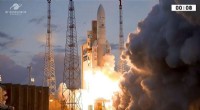
JWST is scheduled to launch in 2021. It will be placed in an orbit around the Sun, about 1.5 million kilometers from Earth. This orbit will allow JWST to avoid the interference of Earth's atmosphere, and it will also provide the telescope with a clear view of the entire sky.
JWST is expected to revolutionize our understanding of the early universe. It will provide us with a new window into the past, and it will help us to answer some of the biggest questions about the origin and evolution of the universe.
Here are some specific examples of how JWST will illuminate cosmic dawn:
* JWST will be able to observe the first stars and galaxies that formed in the universe. These objects are so faint that they are currently impossible to see with Hubble.
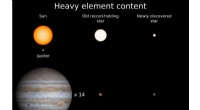
* JWST will be able to study the composition of these early stars and galaxies. This will help us to understand how they formed and evolved.
* JWST will be able to observe the interaction of these early stars and galaxies with their surroundings. This will help us to understand how galaxies grew and evolved over time.
* JWST will be able to observe the formation of black holes and quasars. This will help us to understand how these objects contribute to the evolution of galaxies.
JWST is a powerful tool that will revolutionize our understanding of the early universe. It will provide us with a new window into the past, and it will help us to answer some of the biggest questions about the origin and evolution of the universe.