Humankind's fascination with the possibility of extraterrestrial life has been a driving force behind scientific exploration for centuries. As we continue our quest to understand our place in the universe, the question of whether there are intelligent civilizations out there waiting to be discovered persists. While the search for direct evidence of alien life remains elusive, technosignatures offer a promising new avenue in our quest to uncover the secrets of the cosmos.
Defining Technosignatures
Technosignatures are any detectable signs of technology produced by extraterrestrial civilizations. They can range from intentional beacons designed specifically to draw our attention to subtle markers inadvertently generated as a byproduct of advanced technological activities. Identifying these telltale signatures is a fundamental step in the search for extraterrestrial intelligence (SETI).
Promising Technosignature Candidates
As our technological capabilities advance, so does our ability to detect potential technosignatures. Here are a few promising technosignature candidates that have captured the interest of the scientific community:
1. Atmospheric Anomalies: Advanced civilizations might leave detectable signatures in the atmospheres of their planets. Chemical imbalances or the presence of specific gases, such as chlorofluorocarbons (CFCs), could indicate industrial activity or atmospheric engineering.
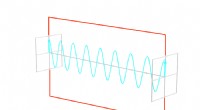
2. Laser Flashes: Intentional laser bursts or powerful radio signals directed towards Earth could be attempts to communicate with us. The Breakthrough Listen Initiative, a SETI project, is actively scanning the skies for such signals.
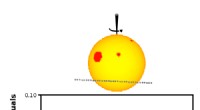
3. Megastructures: Some researchers theorize that highly advanced civilizations might construct enormous, solar-powered structures around their stars, known as Dyson Spheres. Such structures could be detected through their effects on the star's luminosity.
4. Spacecraft and Satellites: As we launch satellites into orbit, it's possible that alien civilizations have done the same. Identifying artificial objects moving in unnatural patterns or emitting distinct radio signals could provide tantalizing hints.
Challenges and Future Directions
While the search for technosignatures is an exciting field of study, it faces numerous challenges. The vastness of space and the sheer number of potential technosignatures make it a painstaking and time-consuming endeavor. Additionally, deciphering the intentions behind these signals, if they exist, is another layer of complexity.
To overcome these challenges, international collaborations and coordinated efforts are emerging. The continued advancement of technology, like ultra-sensitive telescopes and powerful computing, is also fueling the search for technosignatures.
The detection of technosignatures would hold profound implications for our understanding of the universe. It would provide empirical evidence of our cosmic companions, opening new avenues for research and, perhaps, even interstellar communication.
In our quest to explore the vast expanse of the cosmos, the pursuit of technosignatures is a testament to humanity's enduring fascination with the question, "Are we alone?" As we continue our search for intelligent life beyond our planet, every piece of evidence brings us one step closer to unraveling the mysteries that lie beyond our reach.