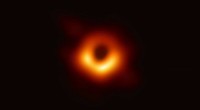
The idea of PBHs as dark matter candidates arises from their unique properties and potential abundance. PBHs could potentially account for a significant fraction of the dark matter in the universe, and they can also explain some of the observed astrophysical phenomena that are not easily explained by other dark matter candidates.
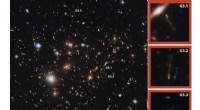
Some potential evidence supporting the PBH hypothesis includes the observation of microlensing events, which could be caused by the passage of PBHs in front of bright background stars. There have also been suggestions that PBHs could be responsible for certain anomalies in the cosmic microwave background radiation.
However, there are also challenges and constraints that need to be considered. For instance, the formation and abundance of PBHs in the early universe are not fully understood, and there are limits on the allowed mass range of PBHs based on various astrophysical observations.
Overall, while the idea of PBHs as dark matter is intriguing and has some supporting evidence, it is still an open question and an area of active research. Further observations and theoretical studies are needed to determine whether PBHs indeed make up a significant portion of dark matter or not.