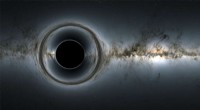
Direct collapse is a theoretical process in which a massive gas cloud collapses directly into a supermassive black hole without going through the intermediate stages of star formation. This process is thought to occur in environments where the gas is extremely dense and turbulent, such as the centers of massive galaxies.
In the case of M87, some observations suggest that direct collapse may have played a role in the formation of its supermassive black hole. For example, the galaxy has a very high concentration of mass at its center, which is consistent with the predictions of direct collapse models. Additionally, the black hole in M87 is surrounded by a massive reservoir of cold gas, which could have provided the necessary fuel for direct collapse.
However, other observations suggest that the black hole in M87 may have formed through a different process, such as the rapid accumulation of stars or the merger of smaller black holes. Therefore, the exact formation mechanism of the black hole in M87 is still not fully understood, and further research is needed to determine its origin.