1. Earth-like Characteristics: TOI 700 d is considered Earth-like due to its size and location within its star's habitable zone. The habitable zone is the region around a star where conditions are suitable for liquid water to exist on the surface of a planet. This suggests that TOI 700 d could potentially support liquid water and thus, potentially host life.
2. Atmospheric Analysis: The next step in studying TOI 700 d will involve analyzing its atmosphere to search for signs of essential gases, such as oxygen and methane. The presence of these gases could indicate the potential for habitability and biological activity. Future space telescopes, like the James Webb Space Telescope, may be able to study the planet's atmosphere in more detail, providing insights into its composition.
3. Climate Modeling: Scientists will use climate modeling to understand TOI 700 d's climate and surface conditions. By studying factors such as the planet's distance from its star, atmospheric composition, and rotation rate, they can determine if the planet has a stable climate that could support liquid water on its surface.
4. Habitability Criteria: The discovery of TOI 700 d will contribute to refining our understanding of the criteria necessary for a planet to be considered habitable. By comparing it with other known potentially habitable planets, scientists can identify common characteristics and parameters that increase the likelihood of habitability. This will help focus future searches for planets with similar attributes.
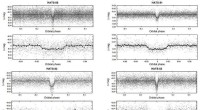
5. Technological Advancements: The detection of TOI 700 d showcases advancements in exoplanet detection techniques. Refining these methods will enable us to discover and analyze even more Earth-like planets in the future, expanding our knowledge about the diversity of planetary systems in the universe.
6. Importance of Water: The search for habitable planets hinges on the presence of liquid water. TOI 700 d's location in the habitable zone suggests that there could be liquid water on its surface, making it a prime candidate for further study and potential future exploration.
7. Biosignatures: If future observations reveal the presence of water and a suitable atmosphere on TOI 700 d, the search will shift towards detecting biosignatures—indicators of potential biological activity. Biosignatures can include the presence of certain gases or molecules that could be associated with life, such as oxygen, methane, or complex organic molecules.
8. Diversity of Planetary Systems: The discovery of potentially habitable planets like TOI 700 d broadens our understanding of the diversity of planetary systems in the universe. It demonstrates that Earth-like planets may be more common than previously thought, providing us with more opportunities to explore and understand the conditions that facilitate habitability.
Overall, the discovery of TOI 700 d adds to the growing list of potentially habitable planets and provides scientists with a renewed focus for further study and observation. It deepens our understanding of the universe and brings us closer to answering the fundamental question of whether life exists beyond our planet.