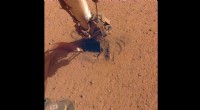
One remarkable aspect of Rochette is that it resembles basaltic rocks formed by volcanism on Earth that were associated with hydrothermal activity and potential biological environments. By examining such rocks in detail, scientists are hopeful that the rover may detect chemical compounds, textures, or mineral features suggesting past habitats suitable for microorganisms. Rochette will help scientists in identifying possible biosignatures within Martian rocks.
Obtaining such samples is one of the key goals of the Perseverance mission, and Rochette was among many promising rock candidates found in Jezero crater, chosen because it once held a 45-kilometer-wide lake. Jezero's geologic features could shed light on whether it possessed environments appropriate for microbial life three to four billion years ago. With such evidence, Rochette provides important clues to help determine if there is or ever was habitable environments on Mars.
Perseverance rover is equipped with sophisticated scientific instruments tailored precisely for this rock investigation purpose. For instance, the Scanning Habitable Environments with Raman and Luminencence for Organics and Chemicals (SHERLOC) instrument can investigate organic or biological features by searching for fluorescent mineral structures. Furthermore, the Perseverance rover s X-ray fluorescence instrument provides elemental compositional maps of rocks' interiors. Scientists utilize these state-of-the-art technologies to search for chemical clues from various Martian rock components that contribute to understanding the planet's history.
In conclusion, the rock named Rochette showcases why NASA's Perseverance rover journeyed to Mars, symbolizing the mission's central objective of discovering past evidence of Martian habitation. It encapsulates the rover's potential for unravelling the geological chronicles of ancient environments and potentially uncovering life's footprints beyond Earth. Exploring its complexities enhances researchers' insights and propels their scientific inquiry into the intriguing history of the Red Planet.