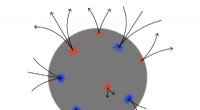
Observing the effects of a black hole on its surroundings: Black holes can have a gravitational effect on the objects around them, such as stars and gas clouds. By observing the motions of these objects, astronomers can infer the presence of a black hole. For example, if a star is orbiting an invisible object that is very massive, it is possible that the object is a black hole.
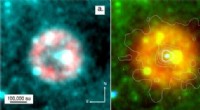
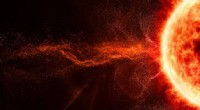
Looking for X-rays and gamma rays: Black holes can accrete matter from their surroundings, which can produce X-rays and gamma rays. By observing these emissions, astronomers can identify the presence of a black hole.
Using gravitational waves: Black holes can emit gravitational waves, which are ripples in spacetime. These waves can be detected by instruments such as the Laser Interferometer Gravitational-Wave Observatory (LIGO). By detecting gravitational waves, astronomers can learn about the properties of black holes and their mergers.
It is important to note that finding black holes is a challenging task, and astronomers are constantly developing new methods to improve their ability to detect these mysterious objects.