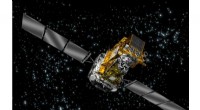
SpaceShipOne was a privately funded, suborbital spacecraft that made history in 2004 by becoming the first privately funded crewed spacecraft to successfully launch into space and return. This remarkable achievement marked a significant milestone in the history of space exploration and paved the way for the development of future commercial spaceflight endeavors.
The SpaceShipOne Design
SpaceShipOne was a unique spacecraft designed by Burt Rutan and his team at Scaled Composites. It was composed of two primary components: the White Knight, a carrier aircraft, and the SpaceShipOne itself, the piloted spacecraft designed for space travel.
1. The White Knight:
- Large, twin-engine aircraft
- Carried SpaceShipOne aloft
- Released SpaceShipOne at an altitude of approximately 50,000 feet
2. SpaceShipOne:
- Piloted by a single astronaut
- Sleek, streamlined shape
- Capable of suborbital spaceflight
Propulsion System
SpaceShipOne's ascent into space was powered by a hybrid rocket motor. The motor used a combination of solid fuel (polyethylene) and a liquid oxidizer (nitrous oxide). The rocket engine ignited during flight and provided the necessary thrust to propel SpaceShipOne beyond the Earth's atmosphere.
The Flight Profile
The flight profile of SpaceShipOne was carefully planned to achieve the desired suborbital trajectory:
1. Takeoff: The White Knight takes off from the Mojave Desert carrying SpaceShipOne.
2. Ascent: At an altitude of approximately 50,000 feet, the White Knight releases SpaceShipOne. The pilot then ignites the rocket motor, propelling the spacecraft upward.
3. Apogee: SpaceShipOne reaches its apogee, the highest point in its trajectory. At this point, the pilot experiences weightlessness.
4. Re-entry: After reaching apogee, SpaceShipOne begins its re-entry into Earth's atmosphere. The spacecraft's shape generates aerodynamic drag, slowing its descent.
5. Glide: The pilot controls SpaceShipOne's descent and glides the spacecraft back to Earth.
6. Landing: SpaceShipOne lands safely on a predetermined runway.
Historical Significance
SpaceShipOne's successful flights made history on multiple fronts. It was:
1. The first privately funded crewed spacecraft to reach space.
2. The winner of the Ansari X Prize, a $10 million prize offered to the first privately funded team to launch a crewed spacecraft into space twice within two weeks.
3. A major milestone in the development of commercial spaceflight, paving the way for future space tourism and exploration endeavors.
SpaceShipOne's legacy continues to inspire and motivate private entities and entrepreneurs to pursue ambitious space projects and contribute to the advancement of space exploration.