A supernova begins when a massive star, at least eight times the mass of the Sun, reaches the end of its life. At this point, the star's core is made up of iron, which is no longer able to fuse and produce energy. As a result, the core collapses under its own gravity.
2. Formation of a Neutron Star
As the core collapses, it becomes incredibly dense. The electrons and protons in the core are squeezed together, forming neutrons. This creates a neutron star, which is extremely small and dense. The neutron star has a mass about the same as the Sun, but it is only about 10 kilometers (6 miles) across.
3. Release of Energy
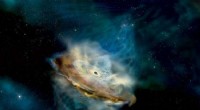
The collapse of the core releases an enormous amount of energy, which causes the star to explode. The explosion is so powerful that it outshines an entire galaxy. The light from a supernova can be seen from Earth even during the day.
4. Supernova Remnant
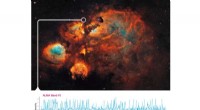
After the explosion, the debris from the star forms a supernova remnant. This remnant is made up of gas, dust, and heavy elements. The heavy elements are created in the star's core during the supernova. Supernova remnants are often beautiful and complex structures. They can be seen in a variety of colors, including red, blue, and green.
5. Impact on the Earth
Supernovas have a significant impact on the Earth. The debris from a supernova can travel through space and reach the Earth. This debris can contain harmful radiation, which can damage living organisms. Supernovas can also cause climate change by disrupting the Earth's atmosphere.
However, supernovas are also important for the Earth. They create the heavy elements that are necessary for life, and they help to keep the universe in balance.