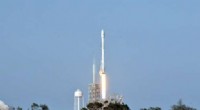
1. Reusable Rockets: Reusable rockets, such as SpaceX's Falcon 9, can significantly reduce the cost of space access. By recovering and refurbishing rockets after each launch, the need for multiple launch vehicles is diminished. This approach leads to increased cost-effectiveness and a potential paradigm shift in space launch architecture.
2. Micro-Launchers: Micro-launchers are small rockets designed to launch relatively lightweight and low orbit. They are suitable for deploying small satellites or CubeSats, which have become increasingly prevalent for scientific research, Earth observation, and communications. Micro-launchers offer lower costs and more flexibility in launch schedules, making space access more accessible.
3. Air Launch to Orbit (ALTO): This concept involves launching spacecraft from an airborne platform, such as a modified aircraft, instead of from the ground. The aircraft carries the rocket to a high altitude before release, providing additional velocity and allowing smaller rockets to reach orbit. ALTO has the potential to reduce the infrastructure required for space launches and offers greater flexibility in launch locations.
4. Propulsion Innovations: Advanced propulsion technologies, such as ion thrusters and solar sails, are being developed for deep space missions. Ion thrusters use electrical energy to ionize and accelerate propellant, creating a gentle but sustained thrust. Solar sails utilize the momentum of sunlight to propel spacecraft, eliminating the need for onboard propellants. These technologies enable efficient and long-duration space travel, although they are still under refinement for practical applications.
5. Launcher-Assisted Spacecraft Systems: This concept involves using a traditional rocket to launch a reusable spacecraft into low Earth orbit (LEO). Once in LEO, the spacecraft can maneuver and propel itself to higher orbits or deep space destinations using onboard propulsion systems. This approach minimizes the size and cost of the initial rocket launch while providing flexibility for subsequent maneuvers.
6. Space Elevators: A concept still in the theoretical stages, space elevators involve constructing a 100,000 km tall structure extending from Earth's surface to geostationary orbit. This structure would enable vehicles to ascend and descend using electromagnetic propulsion, providing a theoretically low-energy and continuous means to access space. However, realizing a practical space elevator presents numerous engineering and materials challenges.
Exploring these alternatives to big rockets can not only reduce costs and increase efficiency in space exploration but also make it more accessible to a broader range of organizations, researchers, and governments. While challenges and limitations exist for each approach, ongoing research and technological advancements continue to push the boundaries of space access.