The first Mars rover, Sojourner, was launched in 1997 and landed on Mars in 1994. Sojourner was a small rover that weighed about 11 kilograms (24 pounds). It was equipped with a camera, a spectrometer, and an alpha particle X-ray spectrometer. Sojourner traveled about 100 meters (328 feet) during its mission.
The second Mars rover, Spirit, was launched in 2003 and landed on Mars in 2004. Spirit was a much larger rover than Sojourner, weighing about 185 kilograms (407 pounds). It was equipped with a variety of instruments including a camera, a spectrometer, a microscope, and a rock abrasion tool. Spirit traveled over 7 kilometers (4.3 miles) during its mission.
The third Mars rover, Opportunity, was launched in 2003 and landed on Mars in 2004. Opportunity was similar in size to Spirit, weighing about 185 kilograms (407 pounds). It was also equipped with a similar set of instruments. Opportunity traveled over 45 kilometers (28 miles) during its mission.
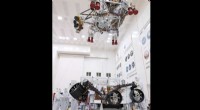
The fourth Mars rover, Curiosity, was launched in 2011 and landed on Mars in 2012. Curiosity is the largest and most advanced Mars rover yet built. It weighs about 899 kilograms (1,982 pounds) and is equipped with a variety of instruments, including a camera, a spectrometer, a microscope, a rock abrasion tool, and a drill. Curiosity has traveled over 23 kilometers (14 miles) during its mission.
The Mars rovers have made a significant contribution to our understanding of Mars. They have provided us with images of the Martian landscape, data on the planet's geology, and insights into its climate and atmosphere. The rovers have also helped us to learn more about the history of Mars and the potential for life on the planet.
Here is a more detailed look at how Mars rovers work:
* Power: Mars rovers are powered by solar panels. The solar panels collect sunlight and convert it into electricity. This electricity is then used to power the rover's instruments and systems.
* Mobility: Mars rovers are equipped with wheels that allow them to move around the Martian surface. The rovers can be driven remotely from Earth or they can be programmed to drive autonomously.
* Sensing: Mars rovers are equipped with a variety of sensors that allow them to study the Martian environment. These sensors include cameras, spectrometers, microscopes, and rock abrasion tools.
* Communications: Mars rovers communicate with Earth via radio waves. The rovers send data and images back to Earth and receive commands from Earth.
Mars rovers are amazing machines that have revolutionized our understanding of Mars. They have given us a glimpse into a world that is unlike any other in our solar system.