The birth and evolution of our cosmic neighborhood, the Solar System, have long been a subject of scientific curiosity. The Nebular Theory, formulated in the 18th century, stands as a prominent explanation for how the Solar System came into being. This theory provides a step-by-step account of the processes involved in the formation and arrangement of the celestial bodies orbiting our central star, the Sun.
The Genesis: A Collapsing Cloud
The story starts with a colossal cloud of gas and dust called the solar nebula. Scientists believe that this nebula might have originated from a supernova explosion or the collision of two galaxies, creating a vast reservoir of raw material for celestial creation.
Gravitational Collapse: Setting the Wheels in Motion
Due to some disturbance, such as a nearby supernova or the gravitational pull from a passing star, the solar nebula began to collapse under its gravity. As the nebula started shrinking, it started spinning faster, resembling an enormous whirlpool in the depths of space.
Birth of a Protostar: The Sun's Humble Beginning
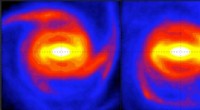
At the heart of the spinning nebula, immense gravitational pressure triggered a nuclear fusion reaction. This ignited the protostar, which would eventually become our life-giving Sun. The surrounding gas and dust swirled around the protostar, forming a spinning disk.
Planetesimals: Building Blocks of Cosmic Structures
Within the whirling disk of cosmic debris, tiny solid particles called planetesimals started sticking together. These planetesimals gradually accumulated more and more mass, eventually growing into larger bodies called protoplanets.
Planet Formation: The Solar System Takes Shape
As the protoplanets continued to grow, they accreted more and more material, eventually becoming the planets we know today. This process of accretion also accounted for the formation of moons, asteroids, and other celestial bodies within the Solar System.
Orbital Arrangement: A Balancing Act
The rotating disk of the nebula exerted a stabilizing force on the developing planets. This allowed them to settle into relatively circular orbits, influenced by their distance from the central protostar. The closer the protoplanet was to the Sun, the faster it moved in its orbit.
The Role of Angular Momentum: Shaping the System's Architecture
Angular momentum, a crucial factor in astrophysics, played a pivotal role in shaping the design of the Solar System. The conservation of angular momentum dictated the distribution of mass within the system and, consequentially, the diverse sizes, densities, and structures of the planets and other objects.
Remaining Debris: A Trace of Cosmic History
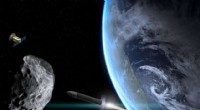
Not all of the debris in the disk was incorporated into the planets. Fragments that couldn't coalesce into larger bodies remained as asteroids and comets. These remnants act as messengers, carrying clues about the early days of the Solar System.
The Enduring Nebular Theory: A Legacy of Discovery
Since its inception, the Nebular Theory has undergone refinements based on scientific advancements and new observations. However, its core principles continue to provide a robust framework for understanding the birth and evolution of the Solar System. The theory serves as a testament to human curiosity and the relentless pursuit of cosmic knowledge.