1. Initial Singularity: The theory proposes that the universe started about 13.8 billion years ago as an infinitely hot and dense point called a singularity.
2. Rapid Expansion: The singularity underwent an incredibly rapid expansion known as the Big Bang, causing space, time, and matter to come into existence.
3. Inflation: During this early phase, the universe expanded exponentially in an incredibly short amount of time, setting the stage for the formation of the cosmic microwave background radiation (CMB).
4. Cooling and Matter Formation: As the universe expanded and cooled, subatomic particles like protons, neutrons, and electrons formed. These particles then combined to create simple atoms such as hydrogen and helium.
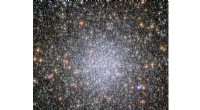
5. Galaxy Formation: Over time, gravity pulled matter together to form larger structures, including stars, galaxies, and galaxy clusters, leading to the complex cosmic structures we observe today.
6. Cosmic Microwave Background (CMB): The CMB is the leftover radiation from the Big Bang that pervades the entire universe. It's a crucial observational evidence supporting the theory.
7. Hubble's Law: The observation that distant galaxies are receding from us and the further they are, the faster they're moving, is explained by the theory's expansion of space.
8. Dark Matter and Dark Energy: Recent observations suggest that the universe's expansion is accelerating due to mysterious forces known as dark matter and dark energy, which make up a significant portion of the universe but remain poorly understood.
In essence, the Big Bang Theory describes how the universe began from a tiny, dense state and expanded and evolved over billions of years to form the vast and complex cosmos we see today.