If you've taken a physics class, you've likely learned the concept of absolute zero: a theoretical limit to coldness. "Absolute zero" is measured in Kelvins (K), not the Fahrenheit or Celsius found on most thermometers.
While we have never observed an object that measures at absolute zero, we have gotten quite close both here on Earth and in the most distant reaches and outer layers of our galaxy.
Scientists have been fascinated by these frigid places in the universe, including the Boomerang Nebula. The Boomerang Nebula, a young planetary nebula, was first named as the coldest place in the universe in 1995, a finding confirmed in 2013.
If you're curious about all the coldest places that exist, let's look at extreme temperatures, from our planet to the solar system, and to the edge of the observed universe.
ContentsIf you had to guess what is the coldest place on our planet, you might think of somewhere like Antarctica or the North Pole.
Actually, the coldest thing ever recorded on Earth was created in a lab in Italy. Researchers studying subatomic particles created a device — called a cryostat — that can create really cold temperatures: An 880-pound (400-kilogram) copper cube reached 6 millikelvins, just six-thousandths of a degree above absolute zero (0 degrees Kelvin) back in 2014.
Considering spots on Earth that are naturally cold, you're right: The coldest temperature ever recorded on Earth was at Dome Fuji, Antarctica, in 2010. Several research organizations confirmed the frigid reading of minus 199.8 degrees Fahrenheit (about minus 144 degrees Celsius) — cold, yes, but not even close to absolute zero.
There are some pretty cold spots on Earth's moon worth taking a look at as well.
In 2009, NASA's Lunar Reconnaissance Orbiter found craters near the moon's south pole that are always in shadow; temperatures in these craters measured in at a balmy 33 Kelvin (minus 400 degrees Fahrenheit or minus 240 Celsius) — colder even than any temperature on distant Neptune.
Among planets, the coldest place ever recorded is actually Uranus: This windy ice giant has been recorded at temperatures as low as 49 degrees Kelvin (minus 371 degrees Fahrenheit).

We have certainly found some cold spots close to home — cosmically speaking — but, coming back to the original question, there are far colder places in the universe.
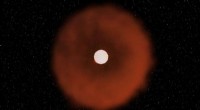
In 2013, researchers confirmed that the Boomerang Nebula, located some 5,000 light-years from Earth in the constellation Centaurus, is the coldest place ever measured in the natural world. Researchers have measured temperatures in the Boomerang Nebula "at a cosmologically crisp one degree Kelvin [minus 457.9 degrees Fahrenheit]," according to NASA.
The part of the universe that contains the Boomerang Nebula is colder than the average temperature for all that we've been able to see and measure.
The Boomerang Nebula was discovered and named in 1980 by astronomers Keith Taylor and Mike Scarrott after they observed it with a large, ground-based telescope from Australia. While they couldn't see the detail that only the Hubble space telescope can reveal, the astronomers saw a "slight asymmetry in the nebula's lobes suggesting a curved shape like a boomerang," according to NASA.
What makes the Boomerang Nebula reach such low temperatures has something to do with whatever is happening within its core, though astronomers aren't exactly sure what that is. Initially, it was thought that the Boomerang Nebula was home to a dying red giant star, rapidly expelling gas.
Today, researchers believe there may be a small companion star contributing to the effect, which is why the Boomerang Nebula is colder than others observed.
Now That's CoolAstronomers "take the temperature" of distant cosmic objects without a thermometer, but how? By using some of the world's most powerful telescopes, astronomers can measure the speeds of gas being expelled away from the center of objects like the Boomerang Nebula. Using models, this allows them to predict the temperatures of distant parts of the universe.