Ever wonder where we will build homes and expand neighborhoods as we use up more and more of Earth's habitable land? Perhaps space will be the next suburb? But before we start sending children on an intergalactic school bus ride, we must figure out new ways to accomplish everyday tasks in space, like growing food. International organizations are devoting time and resources to the development of sustaining human life beyond Earth. Some of the space programs' goals include the upcoming return to and eventual settlement of the moon, along with the pending manned voyages to Mars.
The International Space Station (ISS) provides a cooperative platform on which to research the critical challenges of putting humans in space for a sustained period of time. And researchers must overcome these challenges before any long flights and permanent habitats in space can happen.
Astronaut Image Gallery
Space farming requires greater understanding if humans are to survive in space without constant contact from Earth. Space farming simply refers to growing plants in space. At first glance this might not seem too tricky, but the inherent properties of space and our ability to travel and live in its environment greatly complicate the situation.
Luckily, the ISS has a whole team of astronauts (green thumb not required) from around the world specializing in a variety of scientific and engineering fields. Astronauts conduct experiments and improve our knowledge of cultivating plants in space, as well as many other critical arenas of science. Earth-bound researchers and scientists analyze the results and conduct their own experiments, thinking up new theories and possible solutions to test.
Before we look into the progress the experts have made in space farming, let's delve a little deeper into the obstacles they face.
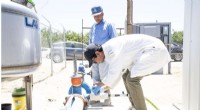
History of the ISSThe U.S. had kicked around the idea of a space station ever since the Reagan administration. In 1993, the U.S. and Russia decided to merge their space station plans and invite other countries to get involved in the project. The first orbiting components of the ISS were joined together in space in 1998, and the station has grown piece by piece ever since. Resident astronauts arrived in 2000. Two years later, astronauts installed Lada, the station's wall-mounted greenhouse that's used in experiments and as a source of fresh food. A second facility aboard the ISS, called the European Modular Cultivation System, is used to study plants and conduct other experiments.
Contents
To understand the challenges of space farming, let's consider some of the elements that affect plant growth in space.
Current space-farming experiments examine different aspects of farming in microgravity (a term to describe an environment with little or no gravity). These experiments could be helpful in the related case of farming on the surface of the moon or Mars, which have significantly lower levels of gravity than Earth. Plants take their cues from gravity for aspects of their growth, such as root and stem orientation. Scientists analyze whether plants can properly grow with lower levels of gravity, and just what those levels are.
Most plants on Earth have access to loads of natural sunlight and grow toward that light, but researchers must fool plants growing in space to follow this same behavior. The choice of lighting in the growth chambers is an important consideration for several reasons. It's important to use energy efficiently in space, because resources are limited. Energy can't be wasted on light bulbs that don't maximize their output. In addition, different types of lighting create different levels of heat, and extra heat is something spacecraft must eliminate (researchers prefer bulbs that produce little heat). Additionally, astronauts don't have extra room to lug spare light bulbs through space, so they need a lighting source with staying power, like light emitting diodes (LEDs).
Little to no gravity can affect how rooting materials function. Different rooting materials and soils are better than others when it comes to water and air distribution -- both key to successful plant growth. Out in space, grainy soils can cause water to scatter and fine soils can prevent airflow [source: Franzen]. Researchers are experimenting with many possibilities, including clay particles, hydroponics and a material like peat-moss.
Plants grow by using the spacecraft's air, humidity and microgravity -- conditions that are different from those on Earth. Researchers are studying whether any contaminants and dangerous organisms from space will affect those space-grown plants, making them inconsumable for humans. Changes in their genetic codes could be harmful in other ways. There's a possibility that if astronauts brought the plants back and mixed them with those grown on Earth, we might end up with the space-version of kudzu. Kudzu (Pueraria montana) is an invasive species of plant, brought to the U.S. from Japan in the late 1800s.
The confined quarters of spacecraft are very different from the massive, rolling farmlands on Earth. Researchers must develop an efficient, streamlined apparatus that can hold crops as they grow with limited space. Growing machines must be automatic (or at least have that capability) and be able to regulate watering, humidity, lighting, air circulation and nutrient delivery. These growing machines also need to integrate with the life support system to successfully exchange carbon dioxide and oxygen.
So when can astronauts visit space's first salad bar? It might be a while as researchers work to understand and overcome the obstacles that space farming presents. Read the next page to learn about their research and why insects might become space food of the future.

Space-farming research usually focuses on plants that have a high yield of edible parts and can flourish in small spaces. Researchers have begun to grow a variety of plants in space, including thale cress, lentils, wheat, leafy salad plants, field mustard plants and soybeans.
And with these plants, researchers are determining how space-farming operations of the future will function. Plants still need all the basics they receive on Earth -- water, carbon dioxide and nutrients. Though plants can live with little gravity, it's best for them to have at least a small amount to prevent any growth problems. Artificial gravity, produced by a mechanical centrifuge, helps solve this problem. Experiments that control the amount and duration of artificial gravity help researchers determine how much gravity affects the direction of root growth. Luckily, the moon and Mars both have some level of gravity, which will aid in sustaining plant life on these celestial bodies.
The results of the research so far have been mixed. In some cases, the plants and seeds cultivated and returned from the ISS mirrored the ground-based control group. In other experiments, they were similar but slightly taller or larger. In still more tests, researchers noted significant differences between the plants grown in microgravity and those under regular gravity.
For example, results from studying NASA's Biomass Production System (BPS) found that while the two sets of plants grew similarly, the immature seeds grown on the ISS were developing at varying rates. The control group's seed development rates were all the same. Elements like seed protein and soluble carbohydrates in the ISS seedlings existed at different levels than those of the ground control group. Researchers noted this might change the taste of space-grown food.
It's important to note, however, that the mixed results may be explained because of the diversity of control factors (like temperature, light and humidity) in the different experiments, the different growing apparatuses, and the fact that plants can just be plain difficult to grow.
Now that we have examined the trials of space-farming research, let's look closer about why this research is so fundamental to future space exploration.
One Giant Leap for GrasshoppersWhether or not they have wings, some insects might get the chance to fly if selected to go in space and become part of the space-farming research. Though many plant parts are inedible for humans, they make a delicious meal for insects. Insects can convert much of this inedible material into something more useful, like fertilizer.
These bugs also provide an excellent source of nutrients for people or animals in space. A grasshopper might be a welcome, if not crunchy, change for astronauts subsisting on dehydrated meals. And, some insects could have additional benefits on long-term space voyagers. For example, the silk produced by silkworms can be woven into rope and clothing.

Though much of the research conducted by NASA and other space agencies is important to the space programs, the impact of space farming has many real-life applications for Earth.
The main benefit and purpose of learning how to farm in space is to enable long-term space exploration -- it's critical that astronauts have a regenerative food source. Imagine going on vacation for a year and having to pack all the meals you planned on eating -- your car would be completely stuffed with groceries.
Plants can assist the life support system in other ways too. They can be used to purify water and recycle carbon dioxide into oxygen. If grown on a large-enough scale, plants could hugely impact how spacecraft and colonies are designed.
Back here on Earth, the impact of space farming will expand our knowledge of agriculture. Researchers hope to transfer what they learn about growing food in the inhospitable climate of space to equally challenging and hostile climates on Earth. They are collecting detailed information about how plants grow and hope this information will help as land becomes scarcer and less fertile. Goals include higher quality crops, higher crop yields and better controlled agricultural systems and greenhouses.
Space farming has led to some other surprising and useful applications here on Earth. One is a special device called Bio-KES which converts ethylene into carbon dioxide and water using ultraviolet light. Ethylene causes plants to ripen and eventually spoil. A device like Bio-KES, used in food storage units and display cases, could help increase the shelf life of produce, flowers and other perishable items. Ultraviolet light has other applications besides helping to reduce the amount of rotten food we must discard. It can also be used to kill pathogens like anthrax, help wounds heal faster and improve the effectiveness of some cancer treatments.
Another area which could have unexpected consequences involves the study of plants' cell walls. Through space farming, scientists may discover how to control and regulate how sturdy a plant will grow. Some plants might benefit from this research in regards to better weather durability. In addition, trees with less-sturdy cell walls would grow faster and be easier and cheaper to process into paper. These genetically-modified trees could help slow deforestation by becoming reliable, quick-growing resources for paper production.
Lastly, plants seem to improve the psyche. Just as gardening and strolling through the park can put you in a good mood here on Earth, the same goes for our space-bound counterparts aboard the ISS. Plants and a lush environment can both stimulate the senses and produce a calming effect. For example, astronauts used plants as therapeutic devices after their colleagues perished in the Columbia disaster [source: Quinn]. Researchers plan to study the psychological effect of plants by following the length of time each astronaut spends gardening and cultivating plant life.
Space farming will affect our future chances of survival on the rugged Martian terrain, and our ability to feed Earth's ballooning population. For more information about space farming, visit the links on the next page.
Sources